A piano is a major purchase. Research before buying can help you find the best piano for your needs and your budget.
Typical costs:
A half-size keyboard with training software averages $200-$250. Expect to pay $550-$2,000 or more for a full (88 keys) digital piano keyboard with touch-sensitive keys and a damper pedal. Digital pianos can be played silently (using headphones), don't need tuning, can make non-piano sounds and are easy to move -- but they don't have the depth and finger action of a traditional acoustic piano. ConcertPitchPiano.com lists digital pros and cons.
Beat-up traditional pianos are often available for $250-$500. These may have problems such as rusty strings or cracked pin blocks, but if an old piano is in reasonably good playing shape and still tunable, it can be a "starter" instrument.
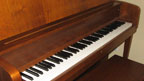
Upright pianos with a vertical sounding board start with the spinet at about 36 inches tall for $900-$1,800 and up; console and studio models are taller (40-60 inches) and sell for $2,000-$8,000 or more.
Grand pianos, which have a horizontal sounding board, come in three basic sizes. A baby grand (less than 6 feet long) starts around $4,000-$8,000 from little-known manufacturers but can run $10,000-$24,000 or more for a high-end brand like Steinway; a grand piano (6-9 feet) is $10,000-$40,000 or more; and a concert grand (9 feet or longer) costs $30,000-$80,000 and up.
A piano does wear out eventually (if not rebuilt or restored), so the age of a used instrument is important. Find the manufacturer's name and the piano's serial number (inside the piano), then check BlueBookOfPianos.com[1] . Get more detailed searches done for $5-$15 at PianoAtlas.com[2] .
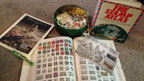
Many experts recommend The Piano Book: Buying & Owning a New or Used Piano[3] at $24.95 (it might be in your local library).
A piano's distinctive sound is made by small hammers striking the strings. Traditional acoustic pianos have 5,000-10,000 or more moving parts. These include the back, the sounding board, the plate and bridges, strings, hammers, keys, pedals and more; PianoWorld.com provides an overview of the basic parts of a piano[4] .
If buying from a dealer, ask if the piano will be tuned and thoroughly cleaned before delivery. A typical warranty on a new piano covers 5-10 years under one owner, and does not include tuning or action regulation.
Additional costs:
A piano bench may be included, or might add $50-$500; some grand-piano benches can be $2,000 or more.
If you've narrowed your search to a specific used piano, having it evaluated by a qualified piano tuner-technician costs about $70-$150.
Don't buy a piano that won't stay tuned; restoring it can cost $5,000-$10,000.
A piano should be tuned a minimum of once a year; twice a year is better. Tuning a piano takes about two hours and costs $75-$125. Most pianos need action regulation (leveling the keyboard, filing the hammers and more) every 5-10 years, at a cost of $1,000-$3,000.
Check if delivery is included. Plus, owning a piano can increase your moving expenses if you hire a professional piano mover.
Discounts:
Some dealers offer 100 percent trade-up; if you buy a piano and later purchase a more expensive model, they'll take the old one back and apply its price to the cost of the next piano.
Shopping for a piano:
Most experts recommend buying a piano of slightly higher quality than your playing ability. It's also good to see (and play) as many pianos as possible before making a decision. With a used piano, look inside for rust or other signs of problems.
MusicWithEase.com lists the major piano brands[5] for both traditional and digital models; the nonprofit PianoEducation.org gives piano buying tips[6] ; and the Piano Technicians Guild talks about what to expect when buying from a dealer or from a private individual[7] .
PianoStores.com lists piano stores by state[8] . Pianos are sold on eBay.com[9] and Amazon[10] , but shipping costs can be high.
7 Lesser-Known Discounts for the 50+ Crowd As they age, members of the Baby Boomer generation don't like to admit that they're senior citizens, but they love getting discounts. It's kind of a quandary, because some of the best deals available are reduced prices for older folks. || Posted October 21 2013
7 Ways to Stretch Your Reduced Food Budget End of the year budgets are tight for everyone, especially in this economy.It's especially hard for the millions of Americans who depend on government programs like food stamps to help make ends meet. || Posted November 11 2013
CostHelper is based in Silicon Valley and provides consumers with unbiased price information about thousands of goods and services. Our writers are experienced journalists who adhere to our strict editorial ethics policy.
CostHelper Community
UTI urgent care visit Paid: 147.00 Visit was $135. Antibiotics was $12. Waiting for four hours in the waiting room and the visit was quick... [more]
Spanish Medical Interpreter Paid: 150.00 I worked with SynShyne Services out of Monroe, NC. They were so worth the price! Professional, friendly, accurate, great attitude and always on time. I recieved an itemized report after every contact and a user friendly invoice weekly... [more]
Skin prick allergy test Paid: 573.00 Took my 9 yr. old in after an allergic reaction to eggs. Several panels for nuts, fish & top 8 allergens. Sure enough, egg came up. Got a script for epinephrine and left... [more]






 Post
Post